


About ICEMEE 2027
Against the backdrop of energy shortages and environmental pressures, energy materials and environmental engineering are advancing in synergy to drive sustainable development. Energy materials focus on novel energy storage and conversion technologies, while environmental engineering specializes in pollution control and carbon emission reduction. The intersection and cross-fertilization of these two fields provide robust support for the construction of clean energy systems, low-carbon industrial upgrading, and ecological security improvement.
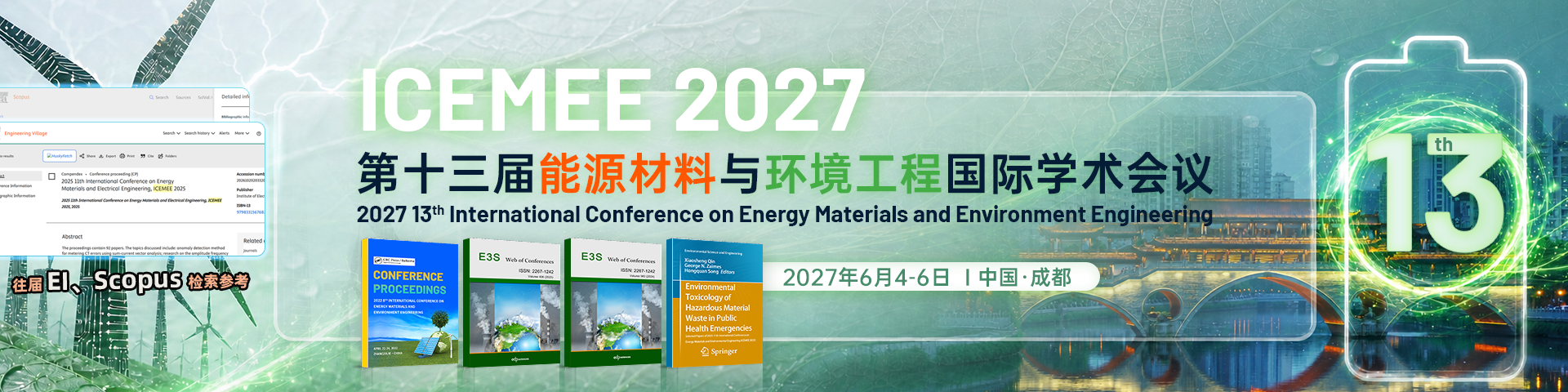
2027 13th International Conference on Energy Materials and Environment Engineering (ICEMEE 2027) will be held from June 4 to 6, 2027, in Chengdu, China. This conference aims to conduct in-depth discussions around research areas such as "Preparation and Properties of Energy Materials," "Environmental Functional Materials," "Pollution Control Technologies," "Resource Recovery and Circular Economy," and "Carbon Neutrality Technologies." It provides a high-level international exchange platform for experts, scholars, engineers, and industry professionals engaged in energy, materials, environment, and related interdisciplinary fields worldwide to share research achievements, discuss technical challenges, and explore innovative applications. The goal is to jointly advance theoretical breakthroughs and industrial practices in energy materials and environmental engineering, addressing new global energy and environmental challenges while serving the needs of sustainable social development.
We sincerely invite researchers, engineers, and academic colleagues from around the world to join this grand event, actively submit papers and participate, and work hand in hand to contribute to a clean, beautiful, and sustainable future!
Conference Info.
🗓︎Important Dates
Full Paper Submission Date: April 5, 2027
Notification Date:May 5, 2027
Final Paper Submission Date: May 20, 2027
Conference Dates: June 4-6, 2027
🗺︎Venue
Chengdu, China
Call For Papers
📚︎Environmental Pollution and Ecological Risk
Pollutant Fate; Pollutant Exposure Modeling; Biodegradation; Pollutant Screening; Environmental Risk Assessment (ERA); Emerging Contaminants (ECs); Bioremediation; Aquatic Ecotoxicology; Terrestrial Ecotoxicology; Biomarkers; Water Resources Management; Environmental Monitoring; Life Cycle Assessment (LCA); Soil Contamination and Remediation; Solid Waste Toxicity Assessment; Air Pollution Prevention and Control; Wastewater Discharge Management; Water Quality Modeling and Risk Assessment; Industrial Wastewater and Ecotoxicology; Biofiltration of Hazardous Gases; Bioenergy Production and Environmental Impacts; Eco-City Development and Environmental Toxicology; Ecological Monitoring and Toxicity Testing; Hazardous Waste Toxicology; Medical Waste Management Policy; Biodegradation Pathways of Emerging Contaminants; Synergistic Effects of Climate Change and Toxic Waste
📚︎Materials
Green Materials and Sustainable Development; Development and Application of Green Materials; Degradable Materials; Recycled Materials; Innovation of Biodegradable Materials; Green Catalytic Chemistry; Green catalysts and their applications in energy conversion; Biocatalytic Materials; Bio-based Materials Technology; Biomaterials and Biomedical Engineering; Sustainable Building Materials and Technologies; Additive Manufacturing Technology; New Functional Inorganic Non-metallic Materials; Smart Materials; Structural Materials; Battery Materials; Electronic and Magnetic Materials; Polymer Materials; Nanomaterials and Nanotechnology; Materials Synthesis and Processing; Physical and Structural Characterization of Materials; Superconductors; Carbon-based Materials; Materials Technology for MEMS Sensors; Synthesis and Preparation of Energy Materials; Lightweight Materials and Manufacturing Processes
📚︎Energy
Renewable Energy; Renewable Energy Systems; Clean Energy Utilization; Clean Energy Conversion; Clean Energy Development; Multiphase Heat Transfer; Biomass Fuels; Biomass energy; Alternative Fuels; Biogas and Biomass; Green Hydrogen Energy; Marine Energy; Hydrogen and Fuel Cell Applications; Battery Technologies and Materials; Battery Chemistry; New Solar Cells; Energy Storage Optimization; Electrochemical Energy Storage and Conversion; Energy Saving Technology; Coal Mine Engineering and Technology; Thermal and Power Engineering; Energy Engineering and Environmental Engineering; Solar Energy Utilization Technology; Advanced Nuclear Reactor Design; Nuclear Safety and Radiation Protection; Smart Grid; Building Energy Efficiency; Greenhouse Gas Treatment; Energy Analysis and Energy Transfer; Energy Conversion and Efficiency; Carbon Dioxide Capture Utilization and Storage (CCUS); Hybrid Energy Systems
Publication
All accepted full papers will be published in the conference proceedings and will be submitted to EI Compendex / Scopus for indexing.
Note: All submitted articles should report original research results, experimental or theoretical, not previously published or under consideration for publication elsewhere. Articles submitted to the conference should meet these criteria. We firmly believe that ethical conduct is the most essential virtue of academics. Hence, any act of plagiarism or other misconduct is totally unacceptable and cannot be tolerated.